
How was MIMRYLO™ (rusfertide) studied and what were the results?


MIMRYLO was found to help people require fewer phlebotomies, keep hematocrit (HCT) below 45%, and provide relief from fatigue
About the clinical study
How was MIMRYLO studied?
What were the goals of the VERIFY study?

(Measured during Months 5 to 7)
- What percentage of people taking MIMRYLO did not need rescue phlebotomies to maintain HCT control?

(Measured during Months 0 to 7)
- On average, did people taking MIMRYLO require fewer rescue phlebotomies overall?
- Did MIMRYLO help people keep their HCT under control?
- Did MIMRYLO provide relief from fatigue?
Most people with polycythemia vera (PV) taking MIMRYLO did not require rescue phlebotomies to keep their HCT controlled*
77% of people taking MIMRYLO did not require rescue phlebotomies
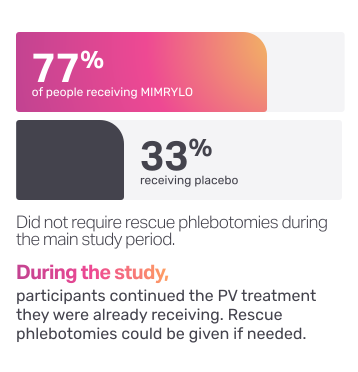
MIMRYLO reduced the need for rescue phlebotomies
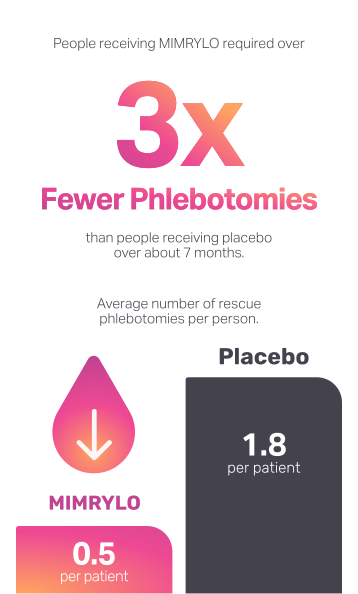
People receiving MIMRYLO required over 3x fewer rescue phlebotomies
MIMRYLO helped the majority of people with PV keep their HCT under control
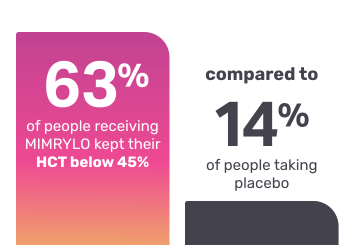
63% of people taking MIMRYLO kept HCT below 45%†
MIMRYLO provided relief from fatigue

In the VERIFY study, people taking MIMRYLO reported reduced fatigue compared to placebo at Month 7
During the study, a validated survey was used to capture self-reported fatigue over time.‡
‡The survey used to measure fatigue was the PROMIS Fatigue Short Form 8a, with lower scores indicating improvement.
MIMRYLO helped reduce HCT levels in as little as 4 weeks

HCT rapidly decreased within 4 weeks
A reduction in HCT was seen within 4 weeks after switching to MIMRYLO.
All individuals in images are actor portrayals.